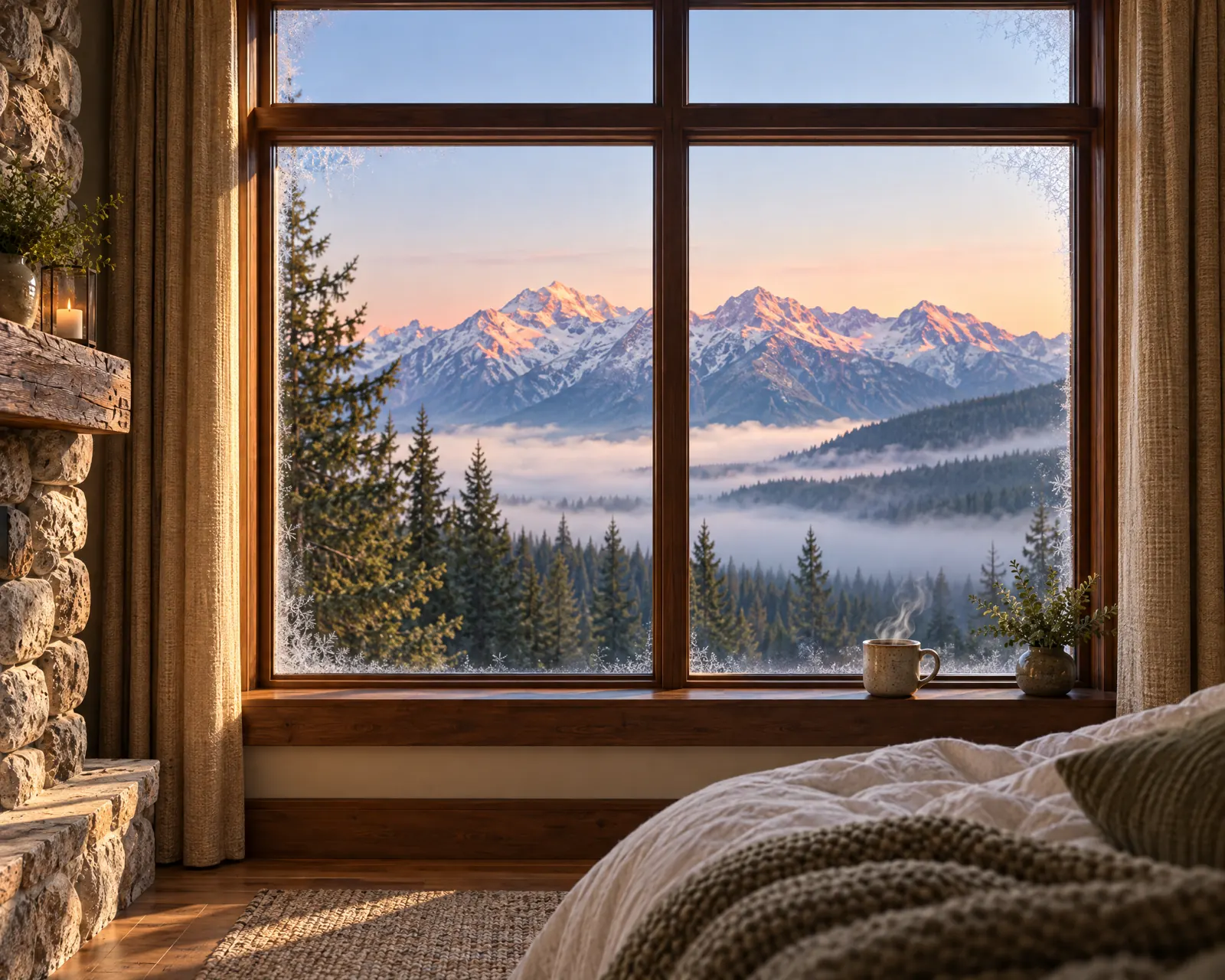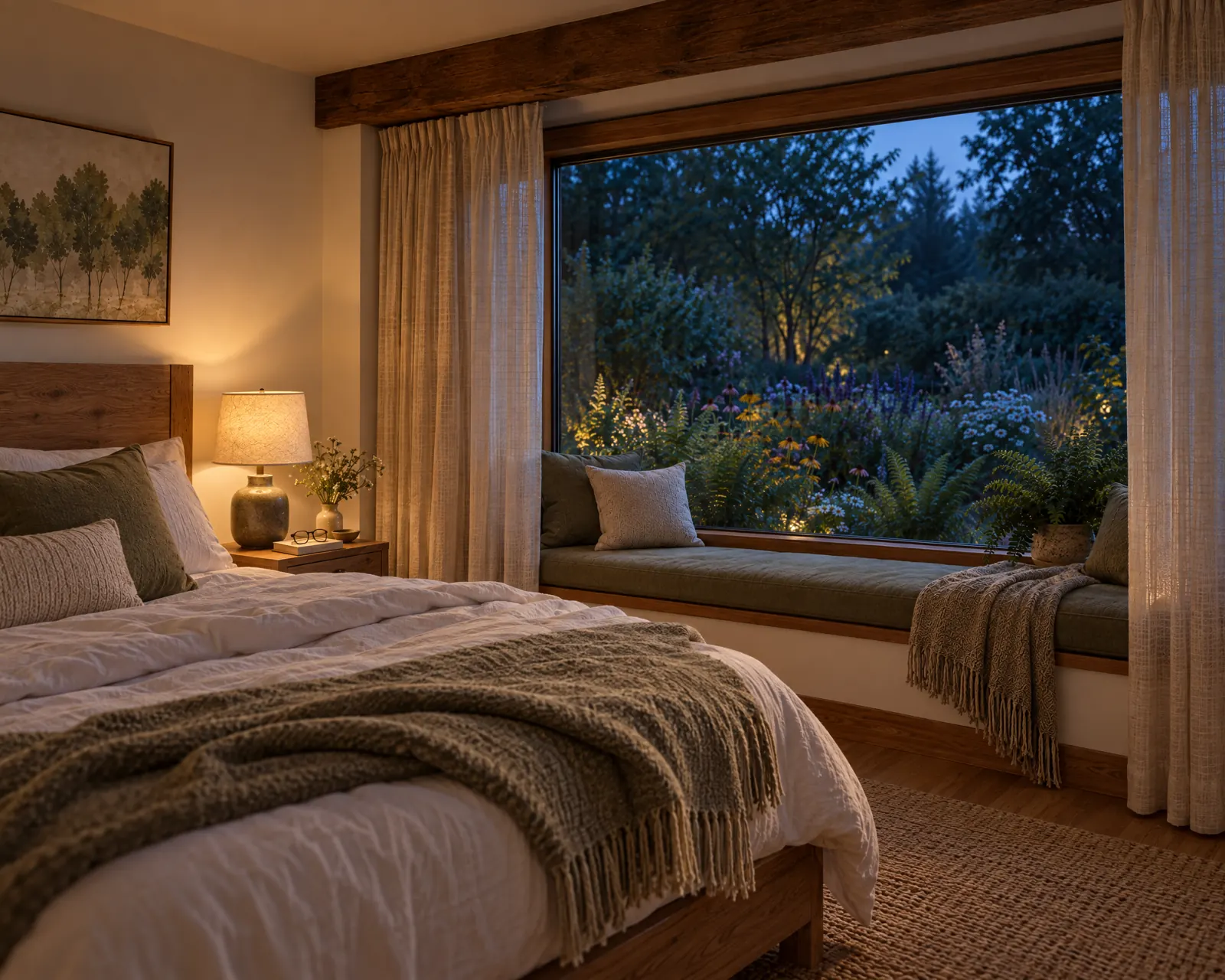
A guest room has one main job: make it easy to exhale.
Design can get noisy quickly. Too many objects, too many clever touches, too much proof that someone had a mood board and no restraint. A room in a small lodge needs a steadier hand.
Light matters first. Morning light should be kind. Evening light should make the room feel warmer than the outside world. Bedside lamps should not punish readers or expose tired faces like an interrogation.
Quiet matters next. Not silence exactly. A lodge can have character. But the room should feel protected from the parts of travel that fray people: road noise, decision fatigue, clutter, bad sleep, and the vague sense that no one has thought through how the space is used.
Texture does more work than decoration. Linen, wool, wood, stone, a surface where your things can land, a place to sit that is not the bed. These are small details until they are missing.
The best room design is remembered physically. Guests may not list the reasons. They just sleep better.
That is enough.
What "quiet" actually includes
Quiet is not just sound level. It is also visual noise, layout friction, and lighting intensity.
A calm room usually has:
- Predictable light sources
- Easy landing surfaces for essentials
- Minimal visual interruption
- A sleeping zone that feels protected
Light plan by time of day
- Morning: soft, directional, usable for planning the day.
- Afternoon: neutral enough for reset time.
- Evening: warm, lower contrast, no interrogation lighting.
Practical room features guests notice subconsciously
- Where the bag lands
- Whether charging is convenient
- If bedside lighting supports reading
- How quickly the room feels "settled"
Why this matters for reviews
Guests often describe the result, not the mechanics: "slept better," "felt peaceful," "room was easy." Those are design outcomes, not accidents.