Small lodges have fewer places to hide.
That is the risk and the advantage. A big hotel can absorb blandness. A small place has to mean something. The welcome, the breakfast, the room, the local advice, the way questions get answered, all of it carries more weight.
We like that pressure.
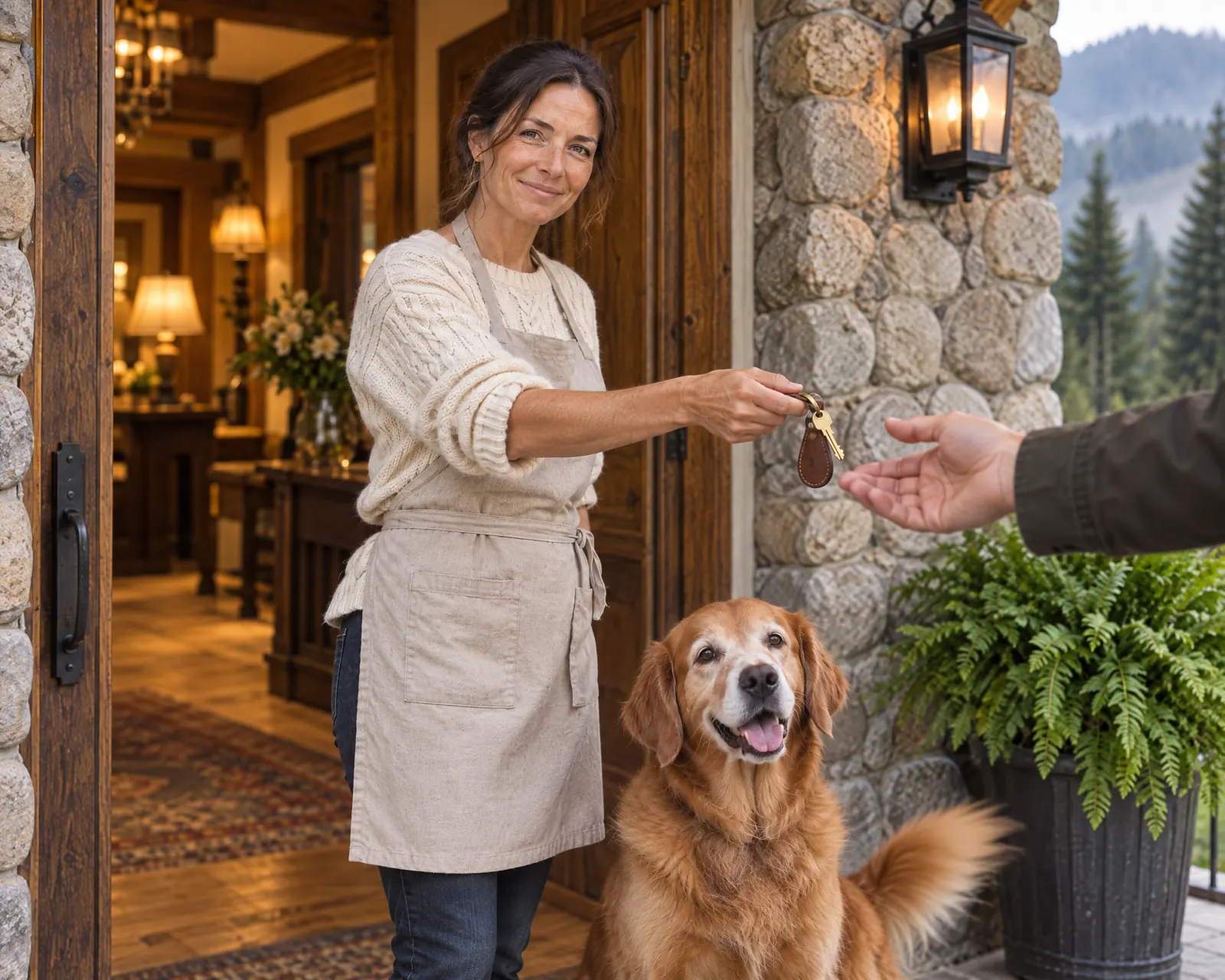
Cedar & Stone is not trying to feel like a chain with better wallpaper. It should feel owner-run in the best sense: direct, practical, warm, and a little personal without becoming intrusive.
Guests should know who to ask. They should not feel like every question has to pass through a system. Arrival should be clear. Breakfast should feel human. Local guidance should be honest enough to say when something is not worth the detour.
The phrase we keep coming back to is no lockbox energy.
Technology is useful. Efficiency is useful. But a mountain lodge should still feel like someone cares that you made it there safely, slept well, and found the good part of the valley.
That is the difference we are building for.
What guests get in owner-run places
- Faster answer loops
- Fewer handoffs
- Better context continuity
- More practical flexibility
What this looks like during a stay
- Arrival questions answered by someone who knows the property
- Morning planning advice tied to local conditions
- Add-on adjustments without bureaucracy
Where small lodges can fail
They can also fail fast if systems are weak. Personality does not replace operations. The best small lodges combine personal care with disciplined execution.
What we aim for
Human hospitality with professional reliability. Warmth plus structure.